
Race and Representation in AA’s Foundation
The first time I read the Big Book, I was looking for myself in its pages.
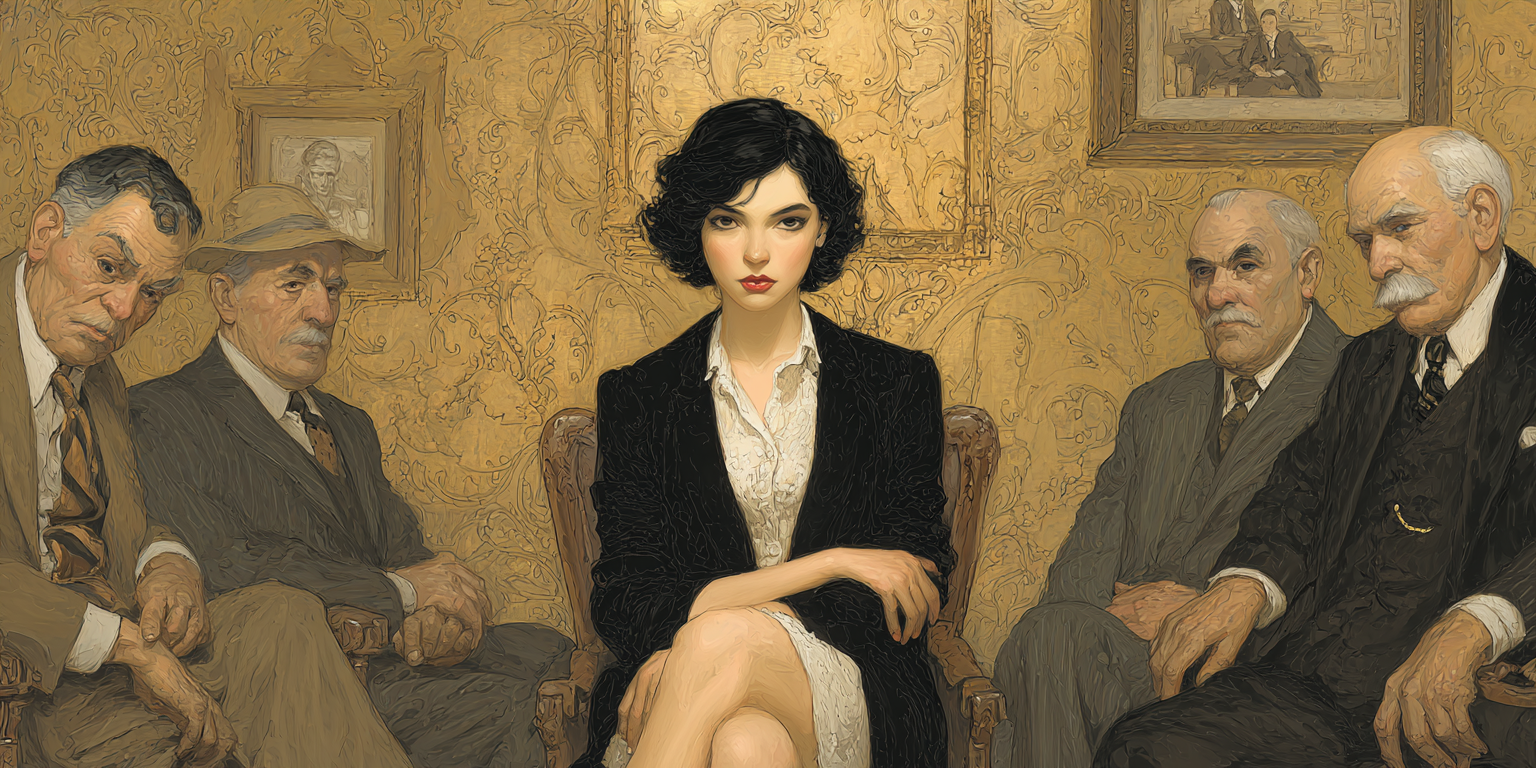
I’d been told that AA was for everyone, that the only requirement for membership was a desire to stop drinking. I believed that. I needed to believe it because I needed help and AA was what was available. But as I read through the stories in the back of the book, I kept waiting to find someone whose life looked like mine. A woman. A mother. Someone whose family came from somewhere other than white America. Someone who carried the specific weight I was carrying.
I didn’t find her.
What I found were stories written mostly by white men in the 1930s and 1940s, talking about their experiences in language that reflected their world. Business failures. Doctors and lawyers. Wives who stood by them. A framework built around Christian concepts of surrender and divine intervention. Lives that shared the disease but not much else with mine.
The program worked anyway. I got sober. But understanding the history of who built AA and whose stories shaped its literature helped me make sense of why certain parts felt like they fit and others required translation.
Who Actually Founded AA
Alcoholics Anonymous was founded in 1935 in Akron, Ohio, by two white men: Bill Wilson, a New York stockbroker, and Dr. Bob Smith, a physician. Both were educated, middle-class professionals. Both were struggling with alcoholism in an era when the medical establishment offered little beyond institutionalization and moral condemnation.
Their meeting and early recovery happened within a specific religious context: the Oxford Group, a Christian organization focused on moral principles and spiritual awakening. The Twelve Steps that emerged from their work carry that influence. Concepts like moral inventory, making amends, and turning your will over to a higher power come directly from Oxford Group practices.
Early AA meetings took place in private homes, church basements, and medical offices. The first members were people who had access to those spaces – mostly white, mostly male, mostly middle-class. The fellowship grew through personal networks that reflected the social segregation of the time.
This isn’t a criticism. It’s context. Bill and Bob created something that saved lives, including mine. But they created it from within their own lived reality, with the resources and perspectives available to them at that time.
The Big Book Was Written by Specific People
The Big Book – which is actually…. officially titled “Alcoholics Anonymous” – was published in 1939. Bill Wilson wrote most of it, with input from the early members in New York and Akron. The personal stories in the back were contributed by members of the fellowship at that time.
Out of the original stories, the vast majority were written by white men. A few women’s stories were included, but their experiences were often framed around their roles as wives or in relation to the men in their lives. Women of color were essentially absent from the narrative.
The language throughout the book uses male pronouns almost exclusively. “When a man is willing to…” “He discovers that…” Even the chapter addressing women – “To Wives” – positions women as supporters of men in recovery rather than as primary members with their own struggles.
This reflected the reality of early AA membership, but it also shaped what the program became. The foundational text that defines the fellowship was written by and for a specific demographic. Everyone else who came later had to figure out how to fit themselves into a framework that wasn’t designed with them in mind.
Cultural and Religious Assumptions Baked Into the Steps
The Twelve Steps are the core of AA’s recovery program. They work. I’ve watched them work in my own life and in the lives of countless other women. But they carry cultural and religious assumptions that aren’t neutral.
The concept of powerlessness in Step One makes sense in the context of white male privilege being insufficient to control drinking. For someone who already navigates the world with less power, who has survived by being strong and self-reliant in environments that offered no safety net, the language of powerlessness can feel different. Not wrong, exactly, but requiring additional work to translate.
The emphasis on God and higher power throughout the steps reflects Christian spiritual tradition. The program says you can define your higher power however you want, and that’s true. But the default language, the examples, the framework – all of it assumes familiarity with Christian concepts of divine intervention, prayer, and spiritual awakening.
For women from different faith traditions, or no faith tradition, or from communities where institutional religion has been a source of harm, that language creates an additional barrier. You can work around it. Many of us do. But it’s work that members whose backgrounds align with the original framework don’t have to do.
Women Were an Afterthought
Women weren’t significantly present in early AA, and when they did show up, they were often viewed with suspicion or treated as special cases rather than full members. The chapter “To Wives” treats women as supporting players in men’s recovery. When the wives themselves were alcoholics, there was confusion about how to handle their presence in what had become a predominantly male space.
The first women’s groups within AA formed because women needed somewhere they could talk honestly about their experiences without the presence of men who didn’t understand or who made the space unsafe. These groups existed parallel to mainstream AA rather than being integrated into it.
Women of color faced even more significant barriers. Racial segregation in the 1930s and 1940s meant that AA meetings, like most social spaces, were separated by race. Black members formed their own groups out of necessity, not choice. The stories of early Black members, early Latina members, early Indigenous members – those aren’t well documented in official AA history because they happened outside the spaces where the literature was being created.
Why This History Matters Now
Understanding this history doesn’t diminish the program’s effectiveness. It contextualizes why women of color often feel like we’re working harder to make it fit.
When I read the Big Book and don’t see my life reflected, that’s not a personal failing. That’s the reality of reading a text written by people whose lives were fundamentally different from mine. When I struggle with the language of powerlessness or higher power, I’m not doing recovery wrong. I’m navigating frameworks built around assumptions that don’t automatically align with my experience.
This history helps me make sense of why predominantly white meetings sometimes feel like I’m visiting someone else’s recovery rather than fully inhabiting my own. The program wasn’t built for me. That doesn’t mean I can’t use it. It means I have to do the work of adaptation that the original members didn’t have to do because the program was built from their experiences in the first place.
What’s Changed and What Hasn’t
AA has evolved. The fellowship is more diverse than it was in 1935. There are women’s meetings, LGBTQ+ meetings, meetings specifically for people of color. The literature has expanded to include more diverse voices, though the Big Book itself remains largely unchanged from its original text.
Some newer publications try to address the gaps. “Living Sober,” published in 1975, uses more inclusive language. Stories have been added to the Big Book over the years that reflect different demographics. Regional and specialty publications exist that center experiences left out of the original literature.
But the foundational text, the one that new members are given first, the one that’s read at meetings and used for step work – that’s still the 1939 version written by Bill Wilson and early members who were predominantly white, male, and middle-class.
For many members, that’s fine. They see themselves in those pages or can abstract the principles without needing specific representation. For women of color, it’s often different. We’re reading between the lines, translating the examples to fit our lives, finding our own version of the truth being described.
Making It Work Anyway
I learned to take what I needed from the Big Book and find the rest elsewhere. I read memoirs by women of color in recovery. I sought out meetings where I wasn’t the only one translating. I found sponsors who understood that my relationship with powerlessness, with God, with cultural expectations of strength and silence – all of that was shaped by realities that the Big Book doesn’t directly address.
The steps work when you work them honestly within the context of your actual life. For me, that meant understanding that the language and examples in the literature were starting points, not perfect maps. It meant trusting my own experience when it diverged from what was on the page.
Some women can’t make that work. They need to see themselves reflected more directly in the foundational texts of their recovery program. I understand that. AA says the only requirement is a desire to stop drinking, but in practice, staying requires finding a way to belong in spaces that may not have been built with you in mind.
What We Pass On
When I sponsor women now, particularly women of color, I tell them this history upfront. I don’t wait for them to struggle with feeling like they don’t fit. I name that the program was created by specific people in a specific context, and that context has limitations.
I also tell them it worked for me anyway. That the principles underneath the culturally specific language are sound. That community matters regardless of the demographics of any particular meeting. That recovery is possible even when you have to do extra work to make the program fit your life.
I don’t pretend the Big Book speaks directly to their experience when it doesn’t. I don’t tell them to ignore their discomfort with language or concepts that don’t align with their reality. I help them find the parts that work and supplement with resources that fill the gaps.
The program gave me my life back. I’m clear about that. I’m also clear that understanding its history – who built it, whose stories shaped it, and whose were left out – helps me make sense of why my path through it required adaptation and translation.
Recovery is possible for all of us. The program works. Both of those things are true. Also true: we don’t all start from the same place in relationship to the literature and language that define the fellowship. Knowing that helps us find our way through anyway.